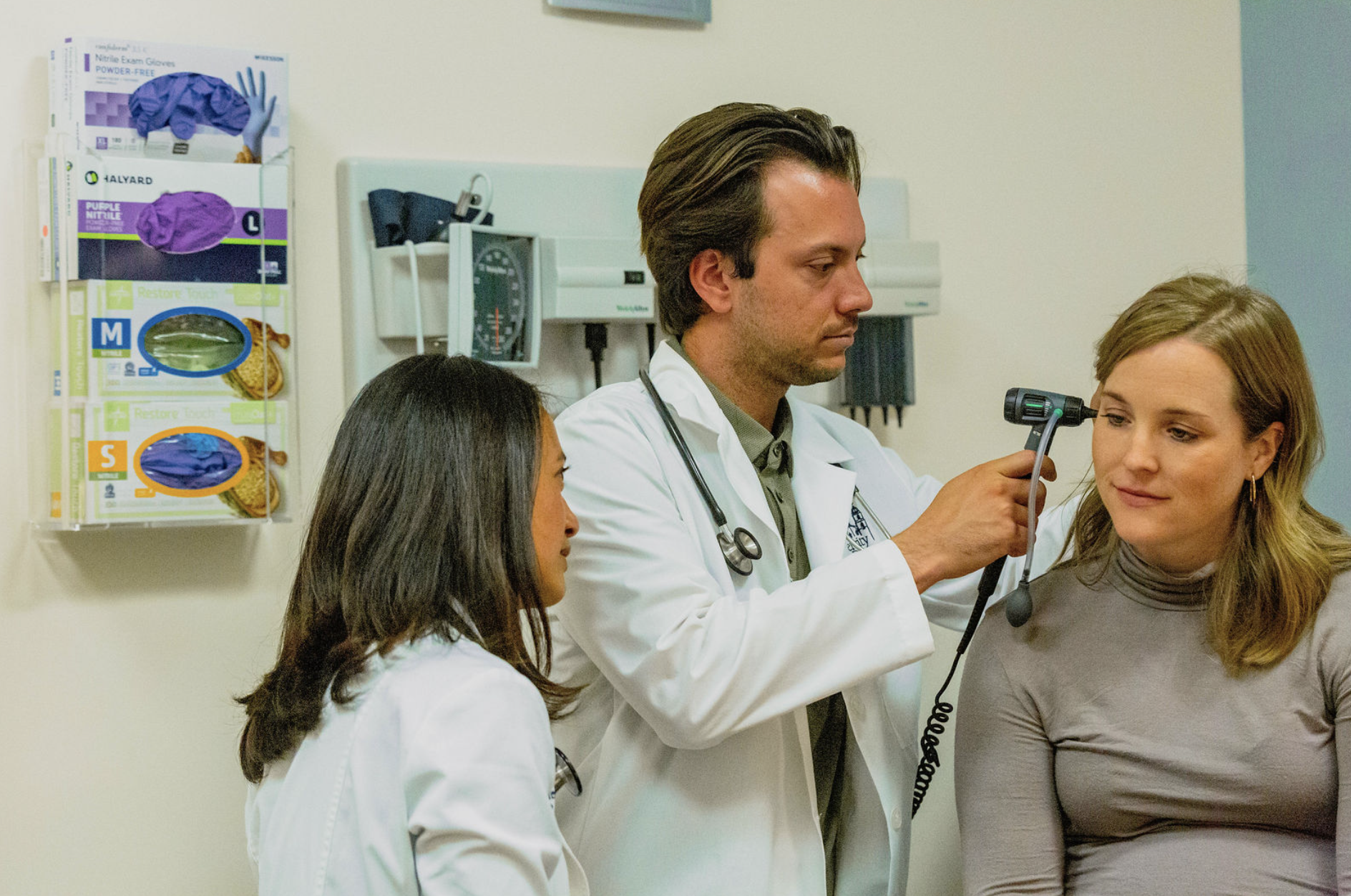


Are you considering a career in advanced practice healthcare but feeling unsure whether to become a nurse practitioner (NP) or a physician assistant (PA)? You’re definitely not alone. While these two important roles are similar, there are important differences that can make one path a better fit for your skills, interests, and goals.
What Is a Nurse Practitioner?
A nurse practitioner is an advanced practice registered nurse (APRN) with graduate-level education who is trained in the nursing model, which focuses on holistic, patient-centered care. NPs can generally prescribe medications, though their prescriptive authority varies by the state in which they practice.
NPs often specialize in a population focus, such as women’s health, mental health, or pediatrics.
What Is a Physician Assistant?
A physician assistant is a licensed medical professional with a master’s-level degree who is trained in the medical model, which is more of a traditional approach to health care that focuses on disease diagnosis, pathology, and treatment.
PAs typically work under the supervision of a physician and can diagnose illnesses, develop treatment plans, and prescribe medication.
Nurse Practitioner vs. Physician Assistant: Key Similarities
A nurse practitioner and a physician assistant are licensed medical professionals who are not doctors or physicians but are trained to provide many of the same health care services. Both can diagnose conditions, prescribe medications, and develop treatment plans. Key similarities include:
- Advanced clinical training
- The ability to diagnose and treat medical conditions
- Prescriptive authority
- Employment in a variety of settings
- A focus on patient-centered care
- Licensure and national certification requirements
Nurse Practitioner vs. Physician Assistant: Differences in Autonomy, Supervision, & Specialization
Now, let’s compare the major differences between nurse practitioners and physician assistants, from how independently they can practice to how their specialization paths differ.
Autonomy
In many states, nurse practitioners have full practice authority, which allows them to diagnose, treat, and prescribe medication without physician oversight. This means that some NPs choose to open and operate their own clinics.
In all states, PAs work under the supervision of a physician to some degree. This doesn’t necessarily mean direct oversight, but a professional collaboration with flexibility depending on the setting and experience. While the level of supervision varies, many PAs work autonomously within a team structure, depending on the environment and their experience.
When it comes to prescriptive authority, NPs in full-practice states can independently prescribe Schedule II-V controlled substances, including medications such as oxycodone, Adderall, Ritalin, and Vicodin.
PAs have prescriptive authority in all 50 states but it’s typically tied to a supervising physician’s scope and governed by state regulations.
Supervision
In full-practice states, NPs do not require physician supervision. However, in reduced- or restricted-practice states, NPs may need to enter into a collaborative agreement or practice under physician supervision, depending on state laws.
PAs, on the other hand, are required to work under physician supervision or within the terms of a collaborative agreement in all 50 states.
A collaborative agreement is a formal, written agreement between an NP or PA and a supervising or collaborating physician that outlines roles, responsibilities, consultation protocols, prescribing authority, and how they will work together to provide care.
Specialization
NPs typically train with a population focus, meaning they specialize in areas such as family health, women’s health, pediatrics, or psychiatric-mental health.
PAs are trained and educated as generalists, enabling them to work in a wide range of areas and specialties, such as surgery, emergency medicine, dermatology, and more. While an advanced education is required, they typically gain specialized experience through on-the-job training rather than through a specific population-focused graduate program.
How NPs and PAs Think: Comparing Nursing vs. Medical Models
NPs work within the nursing model, which emphasizes holistic, patient-centered care. They typically focus on disease prevention, wellness, and treating the patient as a whole, which includes focus on both the mind and body.
PAs are trained in the medical model, which focuses more on disease pathology, diagnosis, and treatment.
Education, Certification, & Licensure Path: What It Takes to Become an NP vs. PA
Here’s a side-by-side comparison of the education, certification, and licensure requirements to become a nurse practitioner versus a physician assistant.
| Category | Nurse practitioner | Physician assistant |
| Prior education | Requires a BSN and an active RN license | Requires a bachelor’s degree (often in health sciences); no nursing background needed |
| Graduate degree | Must complete a Master of Science in Nursing (MSN) or a Doctor of Nursing Practice (DNP) | Must complete an accredited PA master’s program |
| Curriculum focus | Based on the nursing model, with a focus on population-specific care | Based on the medical model, with a broad, generalist approach |
| Clinical training | 500–1,000+ hours of clinical experience (varies by program and specialty) | 2000+ hours of clinical rotations |
| Specialization | Choose a population focus (e.g., family, pediatrics, women’s health) | Trained as generalists but can specialize on the job |
| Program length | Approximately 2–4 years, depending on the degree and specialization | Typically 2–3 years |
| Certification | Must pass national certification requirements aligned with their population specialty | Must pass the Physician Assistant National Certifying Exam (PANCE) |
| Licensure and supervision | Licensed at the state level; may practice independently in full-practice states | Licensed at the state level; must practice under physician supervision |
| Ongoing requirements | Continuing education and periodic recertification required | Must complete 100 continuing medical education (CME) hours every two years and recertify every 10 years |
Many NPs, especially family nurse practitioners, work in outpatient clinics and primary care offices. In full-practice states, NPs can also own and operate independent practices.
With the right experience and advanced education, NPs may move into roles in nursing education, leadership, or research. PAs can also transition into administrative or faculty positions, particularly in PA education programs.
Salary and Job Outlook
Salary can vary based on employer, responsibilities, geographic location, and required education and experience. However, both roles offer strong earning potential and excellent job growth. Here are some general figures to keep in mind:
- The average salary for a nurse practitioner is $132,050. The demand for NPs is extremely high, with overall employment projected to grow 40% from 2023 to 2033. Nurse practitioner has also been listed as the #1 job of 2025 by U.S. News & World Report.
- The average annual salary for a physician assistant is $133,260 with overall employment projected to grow 28% from 2023 to 2033.
Work-Life Balance & Lifestyle Considerations
NPs often have more control over their schedules, especially those working in primary care or outpatient settings. Many NPs can choose between full-time, part-time, or per diem roles, allowing for greater flexibility and work-life balance. However, NPs employed in hospitals or acute care settings may still have to work nights, weekends, or holidays.
PAs typically have less flexibility since they are working under a supervising physician and may follow team-based scheduling models. PAs who work in surgical or hospital environments may have longer hours, on-call responsibilities, or early morning shifts.
PAs often see a variety of cases and can work across specialties, which can keep the workday interesting.
How to Choose: Aligning the NP or PA Path with Your Career Goals
Whether you choose to become an NP or PA depends largely on your background, interests, and long-term goals. Here are some questions to consider:
- Do you already have a background in nursing? If so, becoming an NP might be a more natural step.
- What kind of provider do you want to be? NPs typically focus on holistic, long-term patient care, whereas PAs focus on diagnostics and medical interventions.
- How important is autonomy? As a whole, nurse practitioners have more independence, especially in full-practice states where they can diagnose, treat, and prescribe medications without physician oversight. This level of autonomy allows some NPs to even open and operate their own clinics, particularly in underserved or rural areas. Physician assistants, on the other hand, must practice in collaboration with a physician in all states. While many PAs work with a high degree of independence, they are still legally required to have a supervising or collaborating physician, which can affect their ability to make fully independent clinical decisions.
- Are you more interested in general medicine or a specific population? If you want to specialize in pediatrics or women’s health, for example, NP is the better route. PAs tend to care for a wide range of patients and populations.
- What type of environment do you want to work in? While NPs and PAs often have similar employers, PAs are more likely to work in fast-paced, acute care environments such as surgery or emergency medicine. This can make the PA role especially appealing to those who thrive under pressure and enjoy variety.
In general, you may enjoy working as a PA if you prefer a collaborative, team-based setting, are drawn to high-intensity environments, want the flexibility to work across multiple specialties, and are entering healthcare from a non-nursing background.
The nurse practitioner path might be a better fit if you come from a nursing background, are passionate about holistic, patient-centered care, and want to specialize in a particular population focus.
Take the Next Step in Your NP Career With a Degree from the Hahn School of Nursing
If you're exploring advanced nursing degrees on the path to becoming a nurse practitioner, we invite you to learn more about the Master of Science in Nursing Nurse Practitioner program and the Doctor of Nursing Practice at the University of San Diego. Both programs are designed to equip you with the skills, knowledge, and hands-on clinical experience you need to thrive in today’s healthcare landscape.
Are you curious about what the DNP path looks like? Download our free guide, A Guide to Achieving the Doctor of Nursing Practice at USD, which is perfect for anyone interested in taking the next step toward becoming an NP.

FAQs
Which is a better career path, nurse practitioner or physician assistant?
There’s no one-size-fits-all answer to which career path is “better. It ultimately depends on your background, interests, and professional goals. NPs and PAs are both highly respected healthcare providers who deliver high-quality care, earn competitive salaries, and enjoy strong job growth.
Can nurse practitioners and physician assistants prescribe medication?
Yes, both NPs and PAs can prescribe medication, but the extent of their prescribing authority depends on state laws and their scope of practice. In full-practice states, NPs can independently prescribe medications; in restricted or reduced-practice states, they may need a collaborative agreement with a physician to prescribe certain medications. PAs are authorized to prescribe medication in every state, but this is tied to physician supervision or a collaborative agreement.
Which nurse practitioner specialty pays the most?
Some of the highest-paying nurse practitioner specialties include aesthetic medicine, neonatology, emergency care, and orthopedics.
How long does it take to become an NP or PA?
A nurse practitioner graduate degree program typically takes 2–4 years, depending on whether you’re pursuing a Master of Science in Nursing or a Doctor of Nursing Practice, as well as your chosen specialty. PA programs generally take 2–3 years to complete.
A Guide to the University of San Diego's Adult-Gerontology Clinical Nurse Specialist Program
The University of San Diego's nursing program ranks among the best in the nation. But that's not the only reason future students walk through our doors to pursue one of our graduate degrees. Download our guide for an in-depth look at the Adult-Gerontology Clinical Nurse Specialist program and learn how our rich heritage of excellence in nursing education can help you achieve your academic and professional goals.
GET THE GUIDE